
How to Grow Sprouts
Article by:
Amazing Discoveries™ |
6 min read


Sprouting is simple. You don’t have to be afraid! Although mold and bacteria can pose a problem, you can take steps to ensure your sprouts stay clean, fresh, and safe.
If you’ve never sprouted before, it’s best to start small. You may like or dislike some types of sprouts, and you don’t want to end up with a huge amount of sprouts that you don’t want to eat.
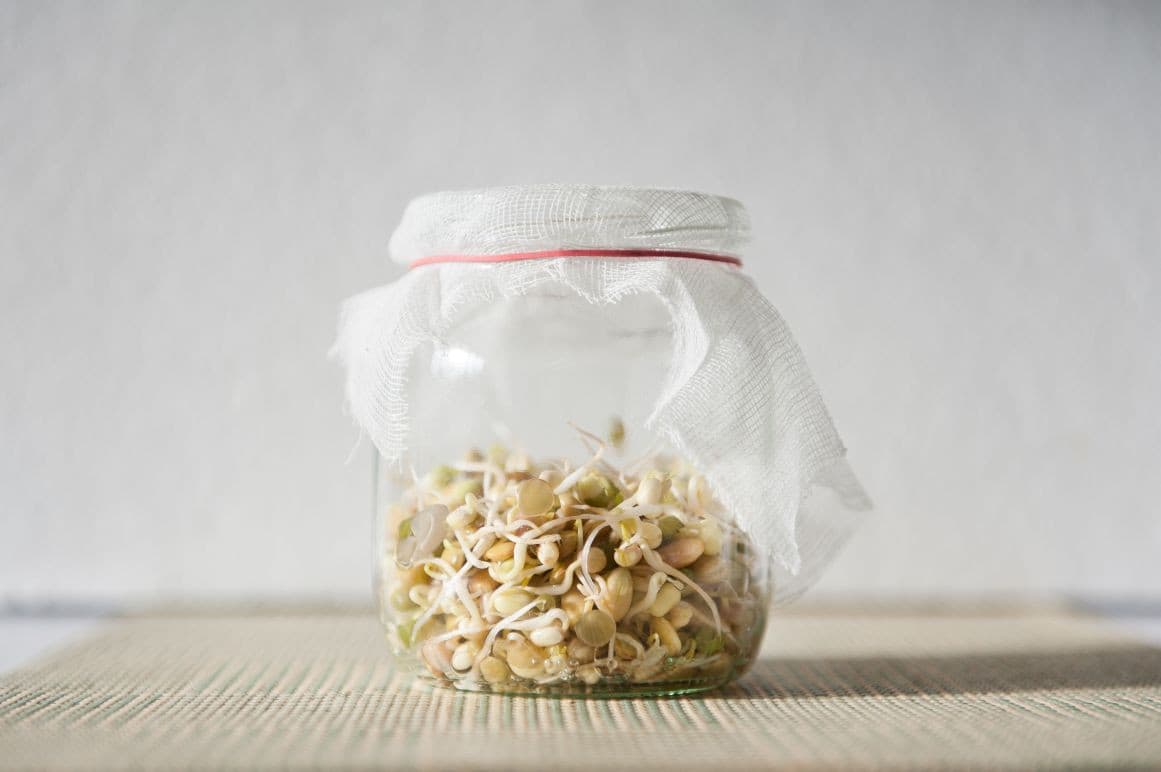
To sprout, place two to three tablespoons of seeds into a one quart (or one liter) glass jar. Fill the jar about halfway with drinking water and cover the top of the jar with a piece of fine mesh fabric or netting. To secure the mesh to the mouth of the jar, use a rubber band or jar ring. Mesh or netting will allow for good air circulation and will help keep the sprouts healthy. Mesh lids that fit on mason jars are also available online or from sprouting supply stores and can be purchased inexpensively.
Leave the jar on the counter overnight. Soaking seeds is an essential step in the sprouting process as all seeds and legumes contain an enzyme inhibitor which prevents them from spoiling. Soaking will remove this inhibitor, allowing the seed or bean to sprout.
The next morning, drain the jar, and rinse the seeds well. Ensure that all water is thoroughly drained – you don’t want any pooling at the bottom of the jar or the seeds will mold. Gently shake the jar to distribute the seeds evenly along one side and place the jar on its side on the counter. Spreading the seeds gives the sprouts room to expand and ensures good air circulation. You don’t want the sprouts to pile up in a heap to rot. You can spread a clean towel near the sink and put your jar there, or you could place it on its side at a slight angle (mouth pointing down) in your countertop dishrack.
You want to keep your sprout seeds moist but not wet, as excess water encourages the growth of mold and harmful bacteria.
Rinse your sprouts two to three times per day as they grow. An automatic sprouter can be a great option for you if your schedule prevents you from being able to rinse your sprouts throughout the day.
Depending on the type of seeds, it will take anywhere from 3-7 days before the sprouts can be eaten. Smaller seeds such as broccoli seeds take longer to sprout–around 7 days–whereas larger seeds such as peas or sunflowers are ready for consumption after 3-4 days. An exception is buckwheat, which only requires 24 hours to sprout.
As your sprouts grow, they will develop small tails. These break off easily if the sprouts experience violence, so handle your growing sprouts gently. When rinsing them, avoid shaking the jar vigorously, but swirl the water around to give all the seeds a good rinse. If your faucet has a spray setting, spraying can bring oxygen to the sprouts. Just be sure the stream is not forceful enough to break the developing roots.
Greening your sprouts
If you’d like your sprouts to green up before you eat them, place them under bright lights or in sunlight for a few hours to develop the chlorophyll.
Sprouting Safety
A concern you might have is whether or not your sprouts are safe to eat. All foods carry the risk of contamination with pathogens that can make people sick. Minimize the risk by practicing good kitchen hygiene. Wash your hands and be sure your sprouting equipment is clean. Buy organic seeds from a supplier that has them lab-tested for pathogens.
Sanitizing sprouting seeds
You can also sanitize your seeds before sprouting. Here are some options.
Hydrogen peroxide
Sanitize your sprouting seeds with hydrogen peroxide before the soaking stage.
- Place seeds in a sterile jar and cover with 3% hydrogen peroxide.
- Let stand for 5 minutes.
- Rinse thoroughly under running water for 1 minute.
- Cover seeds for soaking.
- Skim off any floating seed or seed fragments. These can harbor pathogens.
Grapefruit seed extract (GSE)
Use grapefruit seed extract during the soaking stage.
- Fill a clean one-liter or one-quart jar with drinking water.
- Add 9 drops of GSE and mix well.
- Rinse seeds in a strainer.
- Add seeds to the GSE solution.
- Soak for required soaking time.
- Drain GSE solution.
- Rinse seeds several times before sprouting.
How to know if your sprouts have gone bad
If your sprouts have gone bad, you will likely be able to tell. Spoiled sprouts are slimy and have a bad smell. If your sprouts display visible mold, have an off or bad smell, or are slimy and disintegrating, throw them away and start a new batch in a clean jar.
Certain kinds of sprouts, especially cruciferous sprouts such as radishes, grow a thick root mat that appears fuzzy. This is normal. Do not mistake the dense roots for mold.
You can keep sprouts in the refrigerator but they don’t last as long as mature vegetables like carrots or celery. Plan to use them within three days.
Sprouting is simple, budget-friendly, and can be done year-around in any climate using basic equipment. Sprouts are highly nutritious and can be enjoyed in a variety of ways. There are many different types of sprouts and each offers many health benefits. Start sprouting today!








These statements have not been evaluated by the Food and Drug Administration or Health Canada. Our articles, videos and products are not intended to diagnose, treat, cure, or prevent any disease. If you are pregnant, nursing, taking medication, or have a medical condition, consult your physician before following any recommendations or using any product on our site. You assume sole responsibility for your personal health, and you must use your own discretion under doctor consultation to determine whether any product or recommendation on this site is suitable for your personal situation.
© 1993-2026 Amazing Health™
Amazing Health™ is a registered trademark of Amazing Discoveries Ministries