
Sprouting: The Super-Foods Miracle
Article by:
Emily Burak |
8 min read


Have you seen advertising for emergency food kits, food packages that are meant to be stored in case of food shortages? Have you seen the prices of these products and wondered who can afford such things?
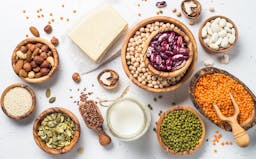
Storing nutritious food that also keeps well can be expensive, but there is a way to have your own food storage with less expense and even more nutrition. Beans and seeds store well and take little space. Plus, they become superfoods when they begin to sprout.
If you want a low-cost, convenient way to boost your nutrient intake and provide a measure of food security for your family consider sprouting. Sprouting transforms seeds into tiny, living plants, significantly increases nutritional value, and boosts nutrient uptake by your body. And it’s so easy!
Sprouts are…
Simple
One of the greatest benefits of sprouting is how simple it is. Anyone anywhere can sprout. The equipment you need can be found in your kitchen. The sprouting process is easy to learn and doesn’t take much effort.
If you live in a place with cold winters and have trouble getting access to high-quality fresh greens during winter months, sprouts are a great option for you. You may be concerned about rising food costs, food quality, and commercial farming methods and would prefer to grow your own food. Even if you don’t have space for growing food–either indoors or out–you can easily fit a jar or tray of sprouts in your kitchen and have fresh, high-quality greens year-around.
Budget Friendly
Sprouts give you good value for your money. Dry seeds and legumes can be purchased in bulk quantities, often at fairly inexpensive prices. They can be stored dry for years without spoiling, and although a few tablespoons of seeds may not seem like a lot, when sprouted they go a long way. You can sprout as many or as few as you need and always have fresh, top-quality food to supplement your meals, even if you’re on a tight budget. On top of this, all that’s needed for sprouting is a basic glass jar and piece of mesh fabric. There’s no need for investing in expensive grow lights or planting equipment.
Versatile
There are many ways to enjoy sprouts. Toss them into a salad, spread a layer in a sandwich, add them to stir-fry vegetables just before serving, or stir them into rice. Remember that many of the health-boosting vitamins and nutrients in sprouts are destroyed when the sprouts are cooked or heated, so try to eat them raw as much as possible. If you like adding sprouts such as mung beans to something like stir-fry, try adding a handful on top of your stir-fry bowl rather than cooking them with the other veggies.
Highly Nutritious
If you buy dry bulk beans, you have to first soak them and then cook them. And what happens with cooking? You lose nutrition and enzymes—up to 80%. Sprouting enables you to enjoy the beans or seeds in sprouted form without cooking. Not only are the nutrients intact, but they are also enhanced in the process! Once sprouted, the nutrients increase exponentially as compared to the dry bean. For example, sprouting mung beans increases the protein availability by 30%, iron by 40%, and Vitamin B1 by 208%. Vitamin B1 is an important nutrient for managing stress, protecting the cardiovascular system and even muscle growth.1
What happens when seeds sprout?
When seeds are sprouted minerals merge with proteins, increasing their function. Fats break down into essential fatty acids; starches are easily converted to simple sugars for rapid glucose metabolism; and the plant proteins break down into easily assimilated amino acids.
And even more uniquely outstanding, sprouts are living foods that contain large amounts of biophotons (bio = life; photon = an electromagnetic particle that carries energy). Foods high in biophotons energize, prevent disease, and repair the body more than even fresh, raw organic produce. All sprouts have immense health benefits. Here’s a snapshot of what some of the most popular sprouts have to offer.
Types of Sprouts
Some of the easiest and most popular seeds to sprout include alfalfa, mung bean, broccoli, and sunflower seeds. Many different seeds and beans can be sprouted, although the pre-sprout soaking period may differ. Some grains such as wheat or barley can be sprouted as well, and can even be used to make sprouted grain bread.
However, beans such as kidney, pinto, and black beans are not suitable for sprouting, so it’s best to do a quick check before you get growing.
Alfalfa Sprouts
Alfalfa sprouts contain saponins which protect your cells by keeping them from absorbing cholesterol. Alfalfa sprouts increase the ability of cells to fend off invaders, maintain balance, and correctly process cellular information. Alfalfa sprouts also aid in the restoration of alkaline balance in the body and contain chlorophyll, which is a powerful antidote to free radicals. The plant estrogen in alfalfa sprouts can also help with female-specific health problems.
Broccoli Sprouts
Broccoli seeds are tiny, but don’t let their small size fool you – these little guys are packed with powerful nutrients. Broccoli is part of the brassica or cabbage family. Vegetables belonging to this family are known as cruciferous. All cruciferous vegetables have compounds that contain sulfur,2 the element largely responsible for broccoli sprouts’ benefits. Sulfur-containing compounds are what give these veggies that pungent “cabbagey” odor. Sulfur is a powerful health-promoting agent that’s great for your blood and digestive system. Sulfur also helps maintain healthy hair, skin and nails, and aids in the absorption of carbohydrates. Broccoli sprouts also contain incredible cancer-fighting compounds that protect your cells from carcinogens.
Mung Bean Sprouts
Something incredible happens when you sprout mung beans. Mung beans contain protein, calcium, and other essential nutrients, but when the beans are sprouted, the absorbable levels of these vitamins and minerals increase dramatically. For example, mung bean sprouts have 80% more potassium than plain mung beans. Potassium is important for building healthy muscles, aiding in the elimination of waste from the body, and giving you healthy, beautiful hair.
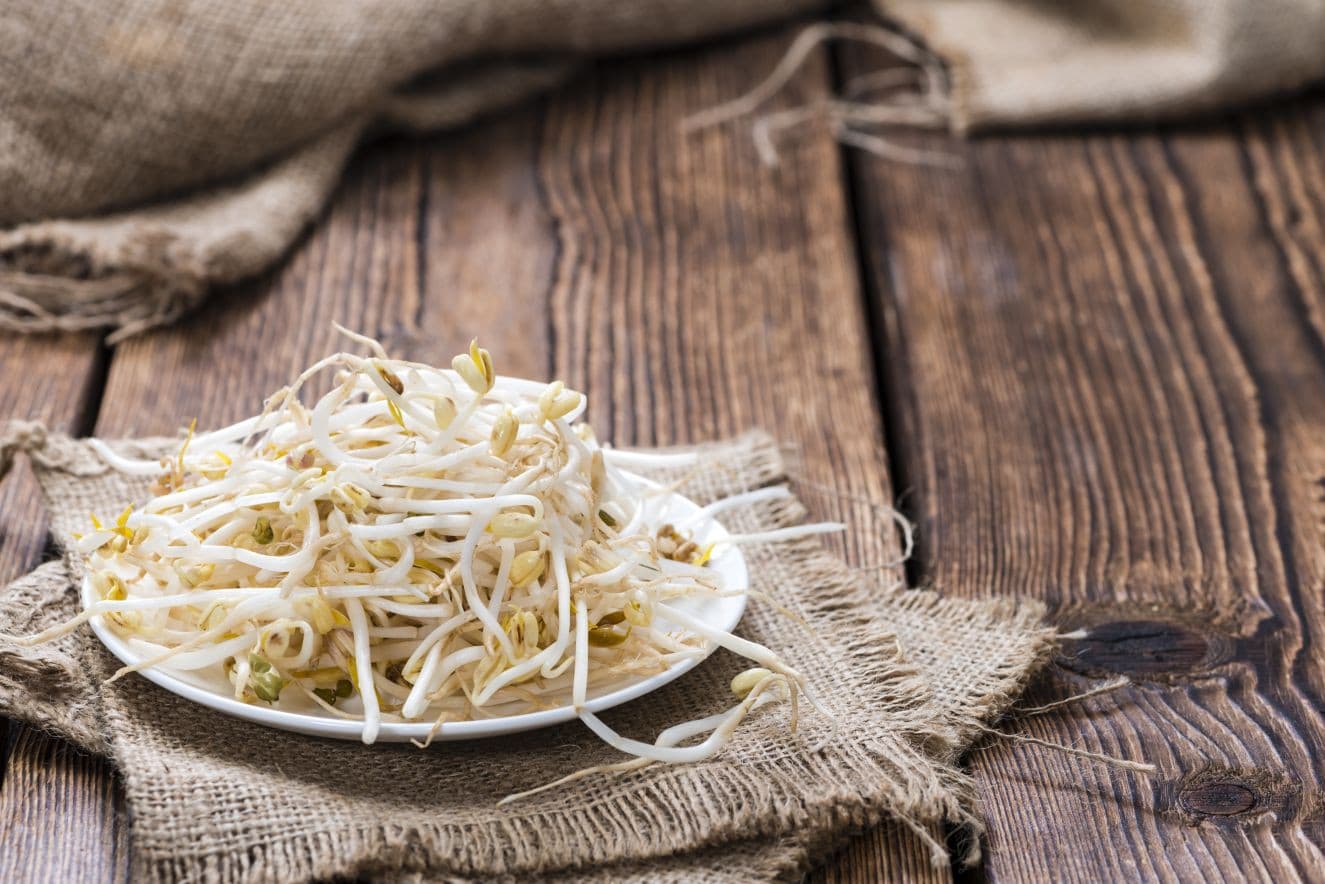
The Vitamin B2 level in mung beans increases by 515% when sprouted. Vitamin B2 is important for healthy cellular functions and plays a crucial role in the formation of red blood cells. Vitamin B2 is also important for people who experience stress.
Sunflower
Sunflower seeds contain essential fatty acids which have amazing benefits for heart health. Sunflower seeds are also high in magnesium and iron, two minerals that are important for good health. Your body needs iron for the production of hemoglobin, a protein used by your red blood cells to distribute oxygen throughout the body.3 Magnesium is important for maintenance of muscles and nerves.4 Having adequate magnesium levels can also help you manage stress better.
Remember, all sprouts – not just the ones listed here – have unique health benefits.
Here are soaking and sprouting times for some of the most popular seeds for sprouting.
| Seed | Soaking Time | Sprouting Time |
| Alfalfa | 8 hours | About 5 days |
| Broccoli | 1-2 hours | About 4-7 days |
| Buckwheat | Overnight | 24 hours |
| Fenugreek | 6-12 hours/overnight | 2-3 days |
| French Lentil | 6-12 hours/overnight | 3 days |
| Mung Bean | 6-8 hours/overnight | 2-3 days |
| Rainbow Radish | 4-6 hours | 4-5 days |
| Spelt | 4-8 hours | 2-3 days |
| Sunflower | 4-8 hours | 7-8 days |
Learn how to grow your own sprouts in our article How to Sprout.
Adapted by Emily Burak from “Great Things Grow in Small Packages” by Jeanie Davis



These statements have not been evaluated by the Food and Drug Administration or Health Canada. Our articles, videos and products are not intended to diagnose, treat, cure, or prevent any disease. If you are pregnant, nursing, taking medication, or have a medical condition, consult your physician before following any recommendations or using any product on our site. You assume sole responsibility for your personal health, and you must use your own discretion under doctor consultation to determine whether any product or recommendation on this site is suitable for your personal situation.
© 1993-2026 Amazing Health™
Amazing Health™ is a registered trademark of Amazing Discoveries Ministries